
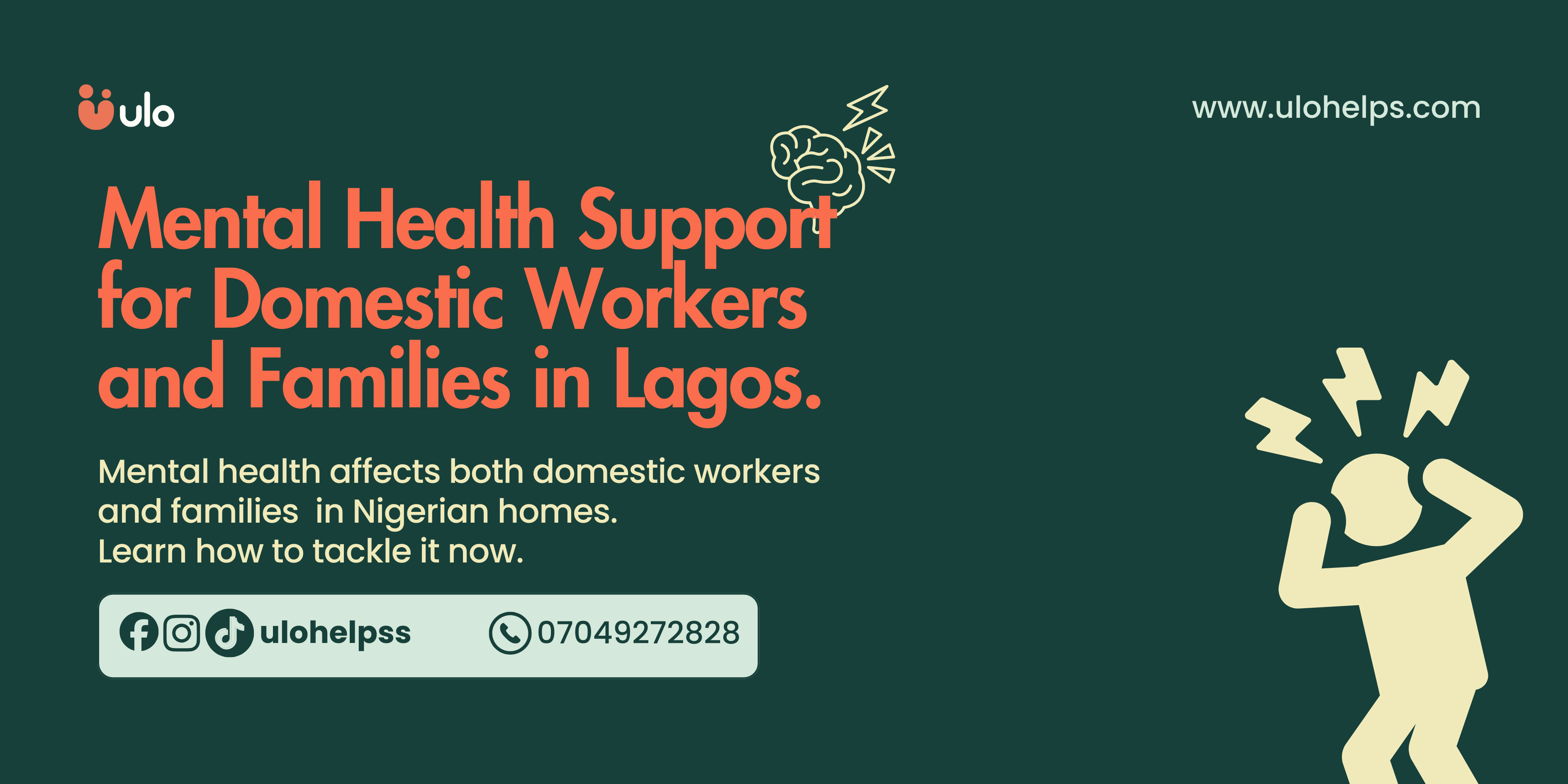
The Silent Mental Health Crisis in Nigerian Homes
Mental health is a subject that many Nigerians shy away from. We talk about it in hushed tones, or worse, we dismiss it completely. When it does enter public discourse, the spotlight usually falls on young people struggling with anxiety, or professionals grappling with workplace stress. But there is a group whose mental health is consistently ignored: domestic workers.
Domestic workers whether they are nannies, housekeepers, drivers, cooks, or family members are the unseen backbone of homes. They are expected to keep households running, raise children with patience, and provide care for the elderly or sick, often while suppressing their own struggles.
Families, too, are under enormous stress, juggling bills, rising living costs, and the unpredictable chaos of Lagos life. Yet we rarely talk about how these pressures affect the emotional health of both domestic workers and the families they serve.This silence is costly.
Domestic worker stress does not stay with the domestic worker, it spills into every corner of family life. In stressful times, when homes should be safe havens, they often become emotional battlegrounds. This is the mental health crisis we pretend doesn’t exist.
Domestic Worker Stress: The Hidden Burden
Domestic work is hard, and pretending otherwise is dishonest. In Lagos, where traffic can swallow hours, workdays stretch endlessly, and the economic climate grows harsher, domestic workers carry an invisible burden. They are expected to perform physically demanding tasks, manage emotional labour, and navigate complex family dynamics, often without recognition or support.
Domestic workers are human. They get tired, they get frustrated, they feel overwhelmed. But in many Nigerian homes, they are treated as though they should be endlessly resilient. When they express fatigue, it is seen as laziness. When they set boundaries, it is interpreted as disrespect. This cultural mindset is toxic. By denying domestic workers the right to struggle, we not only de-humanise them, we sabotage the emotional balance of our families.
A nanny who is emotionally drained may lose patience with children. A housekeeper pushed beyond her limit may neglect important details. A driver under severe stress may become careless on the road. Even parents, who are themselves domestic workers to children or ageing relatives, may become emotionally unavailable to their families when overwhelmed.
Mental health is contagious. When one person in the home is stressed, the atmosphere changes. Children pick up on tension, couples become strained, and even the elderly sense neglect. Families who believe “the domestic worker’s stress is not our problem” are lying to themselves. It is everyone’s problem, because a home is only as stable as the people holding it together.
How Burnout Affects the Entire Household
Burnout doesn’t happen suddenly it creeps in. Families often ignore the early signs until the damage is irreversible. Emotional exhaustion, constant fatigue, frequent mistakes, and growing detachment are not bad attitudes; they are symptoms of burnout.
Many Nigerians don’t recognize burnout as real. They dismiss it as weakness or claim domestic workers just need to “try harder.” This dismissive character is dangerous. Burnout not only reduces productivity; it erodes the relationship between domestic workers and families. It can lead to constant turnover, conflict, and even unsafe situations for children and the elderly.
What Families Must Do Differently
Supporting domestic workers goes beyond paying salaries. Yes, wages matter. But money alone cannot fix exhaustion, anxiety, or emotional neglect. Families who believe they’ve “done enough” simply by transferring money are missing the bigger picture.Supporting domestic workers means treating them as people whose well-being is directly tied to your own. It means asking about their mental state, respecting their rest days, and not expecting superhuman endurance. It means sharing responsibilities within the household instead of dumping everything on one person. And sometimes, it means encouraging them to seek professional help, whether that’s counselling, therapy, or community support.
In a society where domestic work is undervalued, even acknowledging that domestic workers deserve emotional support is controversial. The truth remains: you cannot build a peaceful home while neglecting the mental health of the people who keep it standing.
Here’s where most families get it wrong, they treat mental health as an individual issue. They assume if the nanny is stressed, that’s her problem; if the child is acting out, it’s just “bad behavior”; if the parents are overwhelmed, they should just endure it. But mental health is collective. Children reflect their parents’ anxiety. Domestic workers mirror the stress they absorb from households. Parents model coping mechanisms healthy or unhealthy that their children internalise. A family that ignores these dynamics is a family sowing seeds of long-term dysfunction.
The healthiest families are those that treat mental health as a shared responsibility. They talk openly about stress. They spend time bonding through shared meals, prayers, or activities. They check in on one another’s emotional states. They normalise asking for help instead of pretending everything is fine.
Nigerian families often believe in handling problems privately, but that approach isolates domestic workers and worsens mental health struggles. Communities, whether religious groups, support networks, or professional services, play a crucial role in providing relief.
Practical Ways Domestic Workers Can Protect Their Mental Health
While families must do better, domestic workers also need strategies to protect their own well-being. Creating daily routines, practising mindfulness, exercising, and resting adequately are not luxuries; they are survival tools. Faith, which many Nigerians turn to in times of stress, can be powerful, but it must be paired with practical self-care. A domestic worker who prays but never rests is still headed toward burnout. The uncomfortable truth is that self-neglect is not sacrifice, it is self-destruction.
Domestic workers also need to seek safe work environments. In Lagos, where exploitation and mistrust are common, platforms like ULOhelps offer a way to connect families with verified, trustworthy domestic workers. This reduces the cycle of fear and stress on both sides, making domestic work relationships more stable.
Building Healthier Homes Through Trust and Structure
Finally, mental health is not a Western invention, nor is it a luxury for the privileged. It is the foundation of stable homes and individuals. In stressful times whether economic hardship, health crises, or simply the relentless demands of Lagos living mental health determines whether families thrive or collapse.Supporting domestic workers is not charity; it is strategy. Families that invest in the emotional well-being of domestic workers protect their own harmony. domestic workers who prioritise their mental health protect their ability to serve. And societies that take mental health seriously protect their future. If you want a happy home, start by caring for the minds that hold it together. And when you’re ready to make that commitment easier, platforms like ULO offer a trusted bridge between families and domestic workers. Because in the end, mental health isn’t an optional conversation, it’s the difference between surviving and truly living.
In Lagos, where finding trustworthy help can feel like a gamble, families need more than luck. They need reliable systems. Verified platforms like ULO provide more than convenience; they give families peace of mind by ensuring the people they bring into their homes are trustworthy. This kind of structural support directly reduces the stress that leads to burnout and emotional breakdowns.